
Peatlands cover just 3 per cent of land but store about twice as much carbon as all the world’s forests, making them unsung heroes in the battle against climate change. When healthy, these waterlogged ecosystems formed of decomposing vegetation also filter water and shelter rare species.
Yet, peatlands are fragile and around the world they are being drained to make way for farmland and cities. Nearly 12 percent of all global peatlands are now degraded. When damaged, they release planet-warming carbon that has been locked away, sometimes for millennia, supercharging the climate crisis.
The Global Peatlands Initiative, launched in 2016 with UNEP as a founding partner, unites more than 60 other organizations to protect these critical ecosystems. With funding from the UN Environment Programme (UNEP) Nature Fund and the International Climate Initiative (IKI), the initiative released the Global Peatland Hotspot Atlas: The State of the World’s Peatlands in Maps. The atlas maps threats facing peatlands and outlines how countries can save these pivotal ecosystems.
“The atlas is the first of its kind resource,” says Juan Carlos Vasquez, UNEP’s Head of Biodiversity, People and Landscapes Unit. “It’s a leap forward in knowledge of where and why these ecosystems are most at risk – and, crucially, how we can restore and safeguard these vital carbon sinks.” Here are seven of its key findings.”

The global distribution of peatlands. Credit: Global Peatland Hotspot Atlas, UNEP 2024
Informed by more than 200 individual datasets on peatlands and factors relevant to them – such as soil and water – this map can be considered the most current overview of where peatlands are located. Peatlands have been misunderstood and undervalued for centuries due to lack of scientific knowledge, reliable data and cultural perceptions – often seen as barren wastelands that must be drained to become useful for human purposes. Highlighting just how often peatlands have been overlooked, many smaller peatlands are still being documented. To this end, ‘probable’ peatland areas have been included to encourage further assessment and on-the-ground research.
- Peatlands are biodiversity hotspots
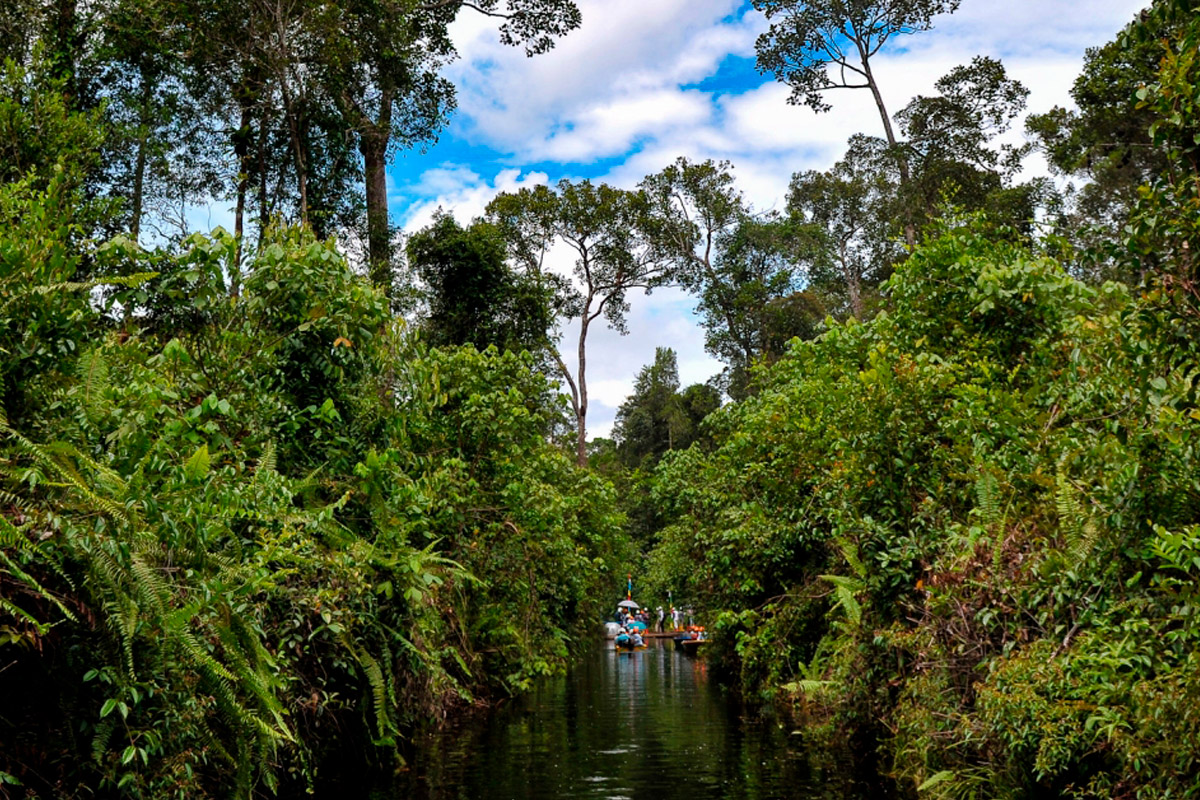
From the blue iridescent firefly in the Arctic tundra to the Bornean orangutan in tropical rainforest peatlands, some of the world’s most rare flora and fauna depend on peat ecosystems for their habitat and migratory pathways. However, increased human activity in peatlands is putting more than 300 plants and more than 600 animal species found only in peatlands at extreme risk. The Atlas showcases regions where peatlands harbour the richest concentrations of rare species, serving as biodiversity hotspots critical to protect.

Map shows global peatland distribution and biodiversity hotspots, where (1) brown indicates areas with peatland ecosystems, which store large amounts of carbon; (2) light green represents regions with high rarity-weighted species richness (above the global mean); and dark green highlights areas with very high rarity-weighted species richness (more than one standard deviation above the mean). Credit: Global Peatland Hotspot Atlas, UNEP 2024
- Farming is the number one threat to peatlands
Because water is critical to peatland’s health, artificial drainage – often for agriculture – is the primary cause of peatland degradation. But peatlands’ fragility also makes them easily degraded by other human activities such as “overgrazing and trampling, oil spills and burning, waste dumping, and infrastructure, with climate change further intensifying the degradation,” states the atlas. Because of its antiquity, peat is complex and difficult to restore – sometimes even to the point of being impossible.

Many countries, especially in Africa, Europe, Asia, and South America, are experiencing significant peatland degradation. The map shows the percentage of national peatland degradation worldwide, where: light pink (0–2%) indicates minimal degradation; peach (2–10%) reflects low degradation levels; orange-red (10–40%) represents moderate degradation; dark red (40–70%) shows high degradation; deep burgundy (70–100%) marks very high or near-total degradation; grey indicates countries with no available data. Credit: Global Peatland Hotspot Atlas, UNEP 2024
- Peatlands are a major source of planet-warming carbon dioxide emissions
About 4 per cent of annual human-made greenhouse gas emissions come from degraded peatlands. The biggest cause of this is drainage: sapping peatlands of water exposes their carbon-rich soils to oxygen, which causes the organic matter in the soil to decay more rapidly, releasing greenhouse gases. The map shows each country’s amount of greenhouse gas emissions coming from peatlands, based on drainage for forestry, agriculture and peat extraction; this excludes emissions released from fires. Such data can serve to inform countries on how to better conserve peatlands to achieve meeting their emissions-reduction targets for the Paris Agreement on climate change.

- Peatland fires can become super-emitting events
Peatlands blazes can release more greenhouse gases than any other type of fire – up to 10 times more carbon per hectare than typical forest fires. That said, fires are natural to many ecosystems, and healthy peatlands can experience fires without penetrating the peat body and releasing stored carbon. The danger arises when fires break out on drained peatlands, which can lead to widespread, deep-seated burning that contributes significantly to climate change.

- The world needs to do more to protect peatlands
Only 19 per cent of all peatlands are in protected areas. What’s more, the Global Peatlands Initiative says that often peatlands in protected areas still experience deterioration due to improper implementation of regulations to protect peatlands.

Because many people depend on peatlands for their lives and livelihoods, the Atlas highlights that protection plans need to be informed by the realities of Indigenous Peoples and their local communities, gender responsiveness, and a wide range of stakeholder engagement to be truly effective.
- Some countries are banding together to save peatlands
Through science-based tools like the Global Peatland Hotspot Atlas, UNEP’s Global Peatlands Initiative is developing new national strategies to conserve peatlands – such as the milestone inclusion of peatlands in Peru’s Nationally Determined Contributions to the Paris Agreement. To continue expanding knowledge on these ecosystems, the Global Peatlands Initiative is now partnering with national governments and local researchers to confirm satellite data on the ground and create regional and national atlases, with adapted policy recommendations following suit.
“This atlas is just the beginning,” says Vasquez. “By working hand in hand with governments and local experts, we are turning data into action, ensuring peatlands are not only mapped, but also meaningfully protected.”
Información extraída de: https://www.unep.org/news-and-stories/story/seven-things-you-should-know-about-peatlands