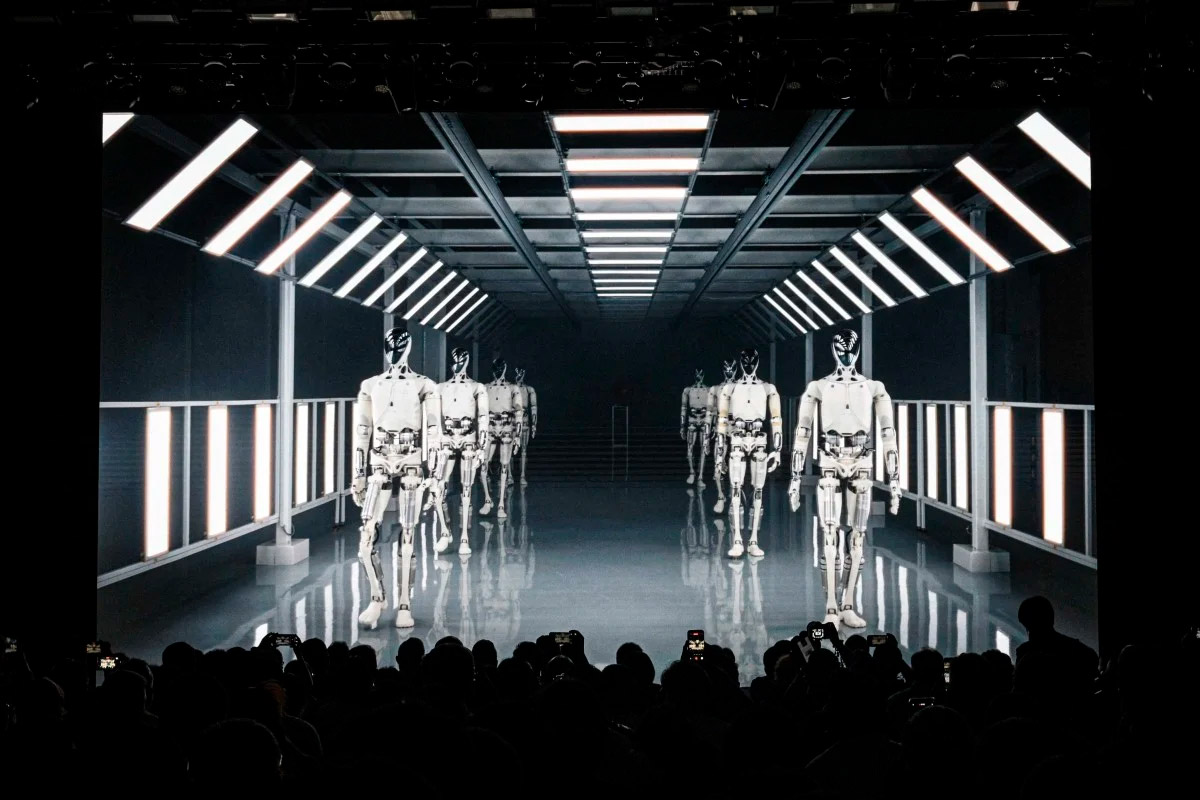

NDRC says there are now more than 150 humanoid robot manufacturers in the country and highlights risk of potential investment bubble
Beijing has flagged risks of excessive duplication in China’s rapidly growing humanoid robot sector, vowing to strengthen guidance for an industry that officials have identified as an important engine of future growth.
“More than half of them are start-ups or cross-industry entrants, which is a good thing for encouraging innovation,” Li said, while also emphasising the need to avoid having too many similar products flood the market and compress the space for research and development.
The Chinese government highlighted “embodied intelligence” – referring to artificial intelligence integrated into machinery such as robots – as a key future industry for the first time in the government work report delivered to the annual meeting of the National People’s Congress in March.
With many models hitting the market at eye-catchingly low prices, critics have raised concerns about a potential investment bubble spurred by marketing gimmicks designed to generate the hype needed to secure fresh capital.
The competition is heating up with the entry of companies from other industries, particularly electric vehicle makers, who are eager to position themselves as potential game changers in the emerging market.
China’s embodied intelligence market is expected to be worth 400 billion yuan in 2030 and more than 1 trillion yuan in 2035, according to a report by the State Council’s Development Research Centre, but Li said the humanoid robot industry was not yet fully mature in terms of technology or the commercialisation of models and application scenarios.
She said the NDRC would strengthen policy guidance for the sector and promote its “healthy and standardised development” in the five-year plan beginning next year.
That would include accelerating the construction of industry standards and evaluation systems, as well as supporting enterprises, universities and research institutions as they tackle challenges in core technologies to resolve bottlenecks.
Work on the standards is under way. On Monday, the Ministry of Industry and Information Technology released a proposed list of members for a national committee on humanoid robot standardisation. Wang Xingxing, the founder of Hangzhou-based Unitree Robotics, and Peng Zhihui, the founder of Shanghai-based Agibot, were listed as two of the deputy chairs.
On Thursday, the NDRC, China’s top economic planning agency, vowed to facilitate the integration and sharing of embodied intelligence technology and industry resources nationwide, and accelerate the application of humanoid robots in real-world scenarios.
Información extraída de: https://www.scmp.com/economy/china-economy/article/3334440/chinas-top-economic-planning-agency-warns-rise-too-many-robots?module=top_story&pgtype=section